How AI Photo Activations Create Memorable Branded Event Experiences
Event attendees have grown used to standard photo booths. They step in, snap a few pictures, and receive a printout with a logo. That setup still works, but it rarely sparks a conversation or lingers in memory after the event ends. Artificial intelligence changes that dynamic. A branded AI photo booth does not just capture a face. It transforms the image into something unexpected, something that fits the event's theme and the brand's visual style. The result is a photo that feels personal and shareable, which is exactly what event organizers want.
These activations are not about replacing the classic photo booth. They add a layer of creativity and interactivity that a standard camera cannot offer. For corporate events, conferences, campus gatherings, and employee celebrations, a branded AI photo booth becomes a destination. Guests line up not just for a souvenir but for the experience of seeing themselves reimagined. And because the output is digital, the shareability factor multiplies. A single guest can post their image to social media, and the brand exposure keeps growing.
What a Branded AI Photo Booth Actually Does
At its simplest, a branded AI photo booth uses artificial intelligence to alter or enhance a photo in real time. The guest stands in front of a camera, the system captures their image, and then an AI model applies a stylistic transformation. That could mean turning the photo into a painted portrait, a cartoon character, a retro film still, or something that matches a specific brand aesthetic. The key difference from a filter is that the AI generates a new image based on a trained model, not just an overlay.
The branding element comes from the visual style applied. If a company's brand colors are deep blue and orange, the AI can be prompted to use those tones across the image. The background, the lighting, even the textures can echo the brand's identity. The result is a photo that feels like it belongs to the event, not just a generic snapshot with a logo stamped in the corner. The brand becomes part of the image itself.
How It Works in Practice
Setting up a branded AI photo booth involves a few moving parts, but from a guest's perspective the process is simple. They approach the station, choose a style or prompt from a screen, and pose for the camera. Within seconds, the AI processes the image and displays a preview. If the guest likes it, they can have it printed, sent via text or email, or uploaded to a shared gallery. The whole interaction takes less than a minute, which keeps lines moving at a busy event.
Behind the scenes, the system runs on a computer equipped with a graphics processing unit that can handle the AI model's calculations quickly. The model itself is usually a version of a generative adversarial network or a diffusion model, trained on a large dataset of images. For an event, the model is fine-tuned or prompted to produce a consistent style. The operator may load several style options so guests can choose between, say, a watercolor look, a comic book style, or a corporate-themed design.
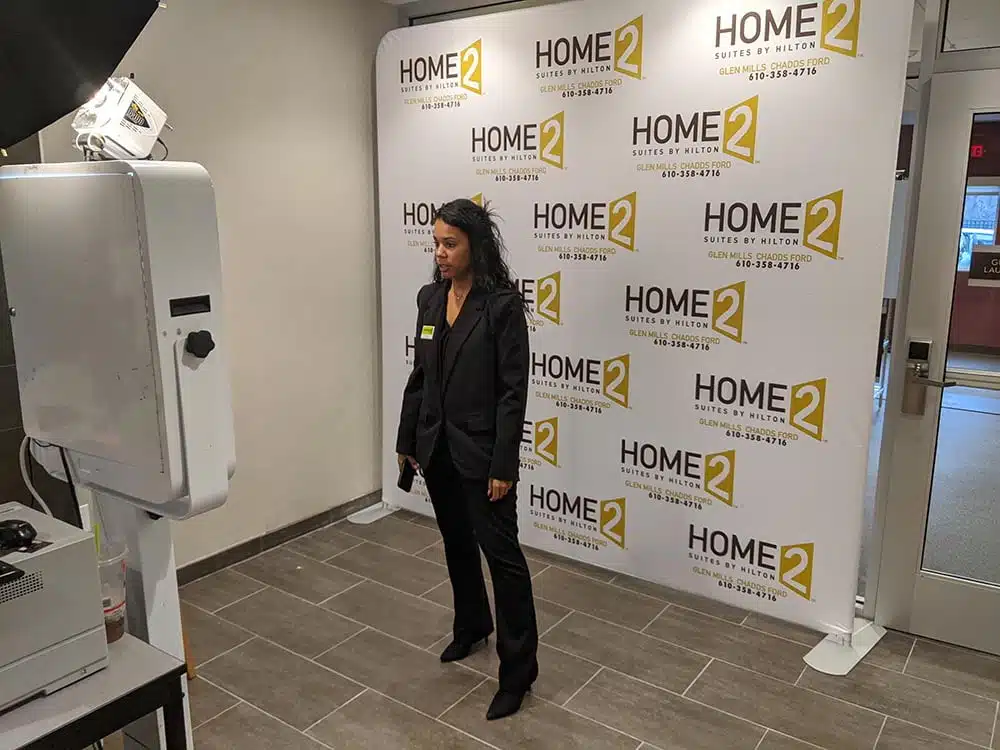
Digital delivery is a major advantage. Instead of a single print that might get lost, the guest receives a high-resolution file. They can save it, set it as a profile picture, or share it on social media. Many systems also include a branded landing page where guests can view all the photos from the event. That page becomes a gallery that lives on after the event ends, reinforcing the brand's presence.
Why This Works Better for Brand Recall
A standard photo booth gives the guest a photo of themselves. A branded AI photo booth gives them a piece of art that happens to feature them. That difference matters because the brain processes a transformed image differently. It is novel, slightly surprising, and more likely to be remembered. When the transformation incorporates brand colors or themes, the association strengthens.
Consider a holiday activation for a company's end-of-year party. The AI could turn each employee's photo into a vintage holiday card illustration, complete with warm tones and festive borders. The employee receives something that feels like a gift, not a marketing handout. They are more likely to share it with family and friends, and each share carries the brand's visual signature. The same principle works for a conference booth, a university welcome event, or a product launch.
Guest consent is also handled smoothly with digital delivery. Most systems ask the guest to approve the image before it is saved or shared. Some offer an option to keep the photo private in a password-protected gallery. That transparency builds trust, which matters when people are wary of how their image might be used.
What to Look For in a Branded AI Photo Booth
Not every AI photo booth delivers the same quality. The first thing to check is the consistency of the output. Some models produce images that look distorted or unnatural, especially around hands and faces. A good system handles those areas cleanly. It is worth asking the provider to show examples from actual events, not just marketing demos.
Customization matters too. The best setups let you define the visual style down to the color palette and the level of abstraction. If the brand has a specific font or pattern, the AI should be able to incorporate that. Some providers offer custom prompts that can be adjusted on the fly. That flexibility allows the activation to match a changing event theme or a specific campaign.
Here are a few practical considerations when planning an AI photo activation:
- Space and lighting: The booth needs enough room for the camera to capture a full shot, and consistent lighting helps the AI produce better results. Avoid placing it in direct sunlight or under harsh overhead lights.
- Internet connection: Some systems process images locally, but others rely on cloud-based AI models. A stable, fast connection is critical for the second type. Check with the provider before the event.
- Staffing: Even a fully automated booth benefits from a host who can guide guests, troubleshoot minor issues, and keep the line organized. A friendly face also makes the experience feel more welcoming.
- Backup plan: Technology can fail. A good provider will have spare equipment or a fallback process, such as a standard photo booth mode, in case the AI model encounters a problem.
The Role of Custom Prompts and Visual Style
Custom prompts are what make a branded AI photo booth truly unique. A prompt is a text description that tells the AI what kind of image to generate. For example, a prompt might read, "a professional headshot in the style of a classic film noir poster, with blue and silver tones." The AI interprets that and applies the style to every photo taken at the booth.

The art of crafting a good prompt lies in balancing specificity with flexibility. Too narrow, and the AI may struggle to fit different poses and backgrounds. Too broad, and the results will vary wildly from one guest to the next. A skilled operator will test several prompts before the event to find one that works consistently. They may prepare two or three options so guests can pick their favorite.
Visual style extends beyond the AI transformation. The physical booth itself can reflect the brand. The backdrop, the lighting, the screen interface, and even the print layout can all carry the brand's look. When the digital experience and the physical environment align, the activation feels cohesive. That attention to detail is what separates a memorable activation from a forgettable one.
Who Benefits Most from This Kind of Activation
Corporate event planners are the obvious audience. A branded AI photo booth fits well at a conference trade show, where the goal is to attract visitors to a booth and leave them with a lasting impression. It also works for employee appreciation events, where the focus is on building morale and creating a sense of belonging. Universities use them for orientation week or alumni reunions, creating shareable content that promotes school spirit.
Nonprofits and fundraising galas have also started using AI photo activations. A custom prompt that ties into the mission, such as a nature-themed style for an environmental organization, can reinforce the cause while giving donors a fun experience. The digital gallery becomes a way to keep attendees engaged after the event, with shareable images that spread the message.
One thing to keep in mind: the novelty of AI-generated photos can overshadow the brand if not handled carefully. The style should always serve the brand identity, not compete with it. A photo that looks like a wild sci-fi scene may be fun, but if it does not connect to the company's image, the branding gets lost. The best activations find a style that is both creative and clearly tied to the brand.
For more details on how these activations are set up and what options are available, many event planners turn to providers that specialize in this space. One such resource is phillyphotobooths.com, which offers branded photo and AI photo booth activations across the Mid-Atlantic region. Their experience with corporate events, conferences, and campus gatherings makes them a practical reference for understanding what works in real-world settings.
Digital delivery also opens up analytics. The provider can track how many photos were taken, how many were shared, and which styles were most popular. That data helps event organizers measure engagement and refine future activations. It is a level of insight that analog photo booths simply cannot provide.
Common Pitfalls to Avoid
As with any technology, there are a few mistakes that can derail an AI photo activation. The most common is underestimating the setup time. The AI model needs to be calibrated to the lighting and the camera. Rushing that step leads to inconsistent results. Another pitfall is choosing a style that is too complex. If the AI has to generate a highly detailed scene, it will take longer and may produce artifacts. Simpler styles often look better and process faster.

Privacy is another concern. Guests should always be informed about how their image will be used. A clear consent screen before the photo is taken, and an option to delete the image immediately, builds trust. Event organizers should also confirm that the provider does not retain guest photos after the event unless explicitly permitted. This is especially important for corporate clients who handle sensitive employee data.
Finally, do not overlook the power of a good host. Even the most advanced AI needs a human touch to guide guests through the experience. A friendly operator who can explain the process, adjust the prompt if something looks off, and keep the energy high makes a huge difference. The technology creates the magic, but the people make it feel personal.
Branded AI photo booths are still a relatively new tool in the event planner's kit, but they are quickly becoming a standard feature at high-impact gatherings. The combination of personalization, shareability, and brand integration is hard to beat. As the technology improves and costs come down, these activations will only become more common. For now, they offer a clear way to stand out in a crowded event landscape. Whether you are planning a conference, a campus activation, or a company holiday party, a well-executed AI photo booth can turn a simple photo into a lasting memory. For more information on how to bring this kind of experience to your next event, you can visit phillyphotobooths.com to explore what is available.